Paper Bowls vs Plastic: Why Eco-Friendly Options Win
Aug 28, 2026Every year, billions of plastic bowls end up in landfills and oceans. You might not realize that producing plastic bowls generates roughly double the carbon emissions of paper alternatives—9.7 to 11.3 kg CO2 versus 4 to 6 kg per kilogram of material. The choice matters more than you think.
Eco-friendly disposable paper bowls offer a superior solution. You'll discover how they compare across four key dimensions: environmental impact, performance, end-of-life options, and practical cost. Compostable paper bowls break down naturally instead of persisting for centuries.
By the end, you'll know exactly how to select sustainable tableware that protects the planet without sacrificing quality. Your next purchase can make a real difference.
Plastic bowls harm the planet. They come from fossil fuels and take centuries to break down.
Paper bowls use renewable materials. They break down in months, not years.
Paper bowls handle hot food well. They resist heat and leaks just like plastic.
Choose PFAS-free and BPA-free bowls. These are safer for your health.
Buy in bulk to save money. Eco-friendly bowls can cost less over time.
Plastic bowls trace their origins to a deeply flawed starting point. Nearly all plastics—99 percent—come from fossil fuels like oil, gas, and coal. You might not realize that extracting these resources releases greenhouse gases before manufacturing even begins. The refining process demands intense heat and chemical processing, consuming two to three times more energy than paper production. This energy hunger translates directly into carbon emissions.
The pollution crisis extends far beyond production. Plastic bowls take 400 to 1,000 years to degrade in landfills. During that time, they fragment into microplastics that contaminate soil and water. These tiny particles enter the food chain, affecting wildlife and potentially human health. Landfills overflow with single-use plastics that never truly disappear—they simply break into smaller, more dangerous pieces.
Global regulations now reflect this urgency. The European Union's SUP Directive banned expanded polystyrene in 2021. Canada followed with a federal ban on PS and PET foodservice items in 2023. Several U.S. states, including California and New York, enforce plastic taxes and bans. Singapore will tax plastic packaging starting in 2025. Australia's state-based bans now cover foam and plastic containers. These policies signal a clear direction: plastic's dominance is ending.
"With fossil-fuel-based plastic under global scrutiny, brands that proactively switch to verifiably compostable packaging—like kraft bowls—are not just eco-friendly, they're future-proofing." — Dr. Lara Kim, Environmental Packaging Policy Consultant, Berlin
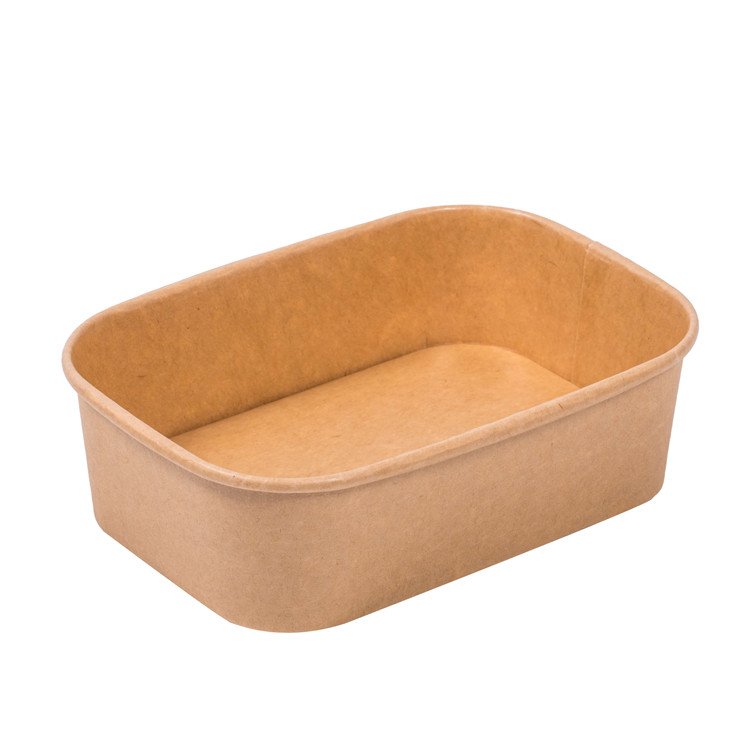
Eco-friendly disposable paper bowls offer a fundamentally different story. Manufacturers craft them from renewable sources like sugarcane bagasse, bamboo, palm leaf, and recycled paper. Sugarcane bagasse, the fibrous residue after juice extraction, would otherwise become agricultural waste. Bamboo grows rapidly without pesticides. Palm leaves fall naturally from trees. These materials absorb CO₂ during their growth cycle, offsetting emissions during decomposition.
The lifecycle comparison reveals stark differences. Kraft paper bowls source from FSC-certified trees or recycled content, absorbing carbon as trees grow. Manufacturing requires lower temperatures and less energy. Transport becomes more efficient because paper bowls nest and weigh less. At end-of-life, compostable paper bowls break down within 60 to 90 days in proper facilities. Plastic bowls persist for centuries.
Carbon footprint data confirms the advantage. A bagasse clamshell box weighing 20 grams produces 45 kg CO2e per 1,000 units, saving 60 kg CO2e compared to plastic. A 21-gram burger box generates 48 kg CO2e per 1,000 units, saving 63 kg CO2e. Each kilogram of bagasse replacing polypropylene saves approximately 3.0 kg CO2e. While these figures cover similar bagasse products, the identical material and production process make them representative for bowls.
You should look for specific certifications when choosing products. BPI certification verifies genuine compostability. Select unbleached options without PFAS coatings. These chemicals, used for grease resistance, persist in the environment and pose health risks. Unbleached kraft paper avoids chlorine bleaching byproducts entirely.
The full lifecycle tells a compelling story. Plastic generates up to 2.5 times more CO₂ than kraft paper across production, transport, and disposal. Custom disposable paper bowls from renewable sources reduce your environmental footprint while meeting the same functional needs. The choice between materials becomes clear when you examine the complete picture.
You need bowls that handle real meals—hot soups, oily curries, saucy noodles. Plastic bowls warp under high heat and can leach chemicals into your food. Eco-friendly alternatives perform better than you might expect.
Bagasse bowls withstand hot foods up to 220°F (approximately 104°C) without warping or leaking. That temperature covers boiling water and most freshly cooked dishes. Bamboo bowls perform even better in side-by-side testing. At 90°C, bamboo bowls resist warping for 60 minutes with a leakage rate of just 1 percent. Bagasse bowls hold their shape for 45 minutes with a leakage rate under 2 percent. Users rate bamboo bowls 8.9 out of 10 for comfort, while bagasse scores 8.4. These materials deliver strength that plastic cannot match.
Microwave and freezer performance varies by bowl type. The table below summarizes what you should expect:
|
Bowl Type |
Microwave Performance |
Key Limitation |
|---|---|---|
|
Single-Wall PE-Lined |
Limited use |
Liner softening or edge warping |
|
Double-Wall Insulated |
Good when certified |
Steam buildup if tightly covered |
|
Kraft Paper |
Good when microwave-rated |
Coating and ink variation |
|
PLA-Coated |
Use with caution |
PLA may soften at higher heat |
|
Bagasse Sugarcane Fiber |
Generally strong when certified |
Formula and PFAS status vary |
You should always check the certification label before microwaving any bowl. Look for explicit microwave-safe claims from the manufacturer. For freezer storage, most compostable paper bowls handle cold temperatures without cracking. Plastic bowls become brittle in freezing conditions, while fiber-based materials maintain their integrity.
The materials touching your food matter for your health. Many disposable bowls contain PFAS—per- and polyfluoroalkyl substances—added for grease resistance. These chemicals persist in your body and the environment. A consortium of scientists published a new scientific statement in 2020 highlighting serious health concerns linked to PFAS exposure from food packaging:
Cancer
Hormone disruption
Liver and kidney toxicity
Harm to the immune system, including decreased response to vaccines
Reproductive and developmental toxicity
Recent decades of research link PFAS exposure to immune system suppression, lower birth weight, and increased risk for some cancers. These compounds appear in burger wrappers and salad bowls alike. You cannot see them or taste them, but they accumulate in your body over time.
BPA presents another concern. This chemical appears in some plastic linings and can mimic estrogen in your body. Even small amounts may disrupt your endocrine system. You should avoid bowls containing BPA entirely.
Your safest choice is unbleached, PFAS-free, and BPA-free options. Unbleached kraft paper avoids chlorine bleaching byproducts. PFAS-free coatings use plant-based alternatives like PLA or natural wax. These materials provide grease resistance without toxic persistence. Reputable manufacturers offer bowls that meet these strict safety standards. Some products carry explicit PFAS-free and BPA-free certifications, so you do not need to guess about what touches your food.
When you select disposable paper bowls, read the fine print. Look for third-party certifications that verify safety claims. Avoid vague terms like "eco-friendly" without supporting documentation. Your health depends on these details. The performance of these bowls matches or exceeds plastic in everyday use, without the chemical risks. You get strength, heat resistance, and peace of mind in one package.
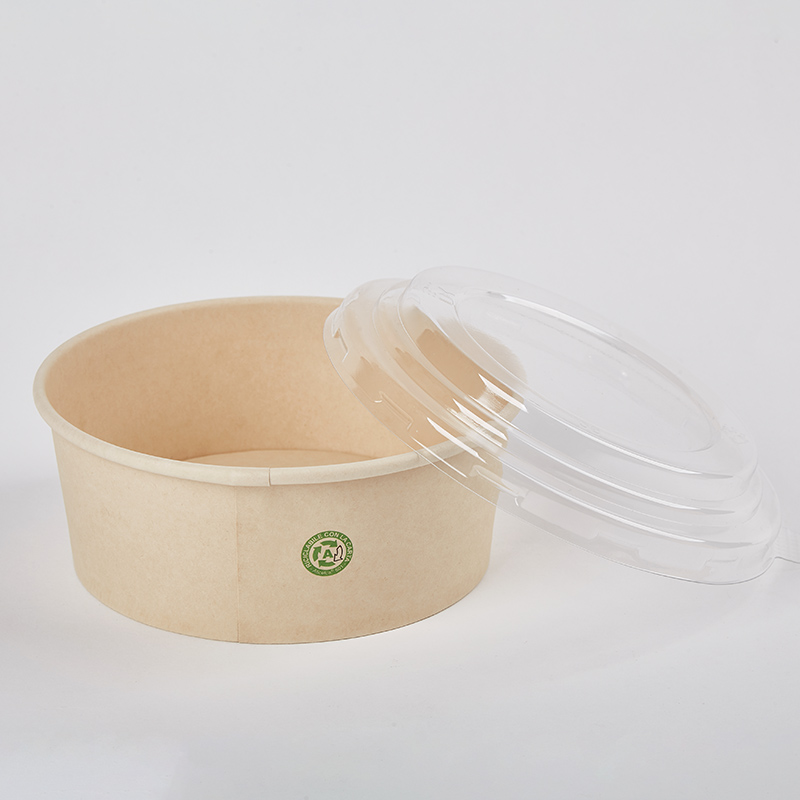
You see the word "biodegradable" on many products. It does not mean what you think. Any material can eventually break down. "Compostable" carries a specific, verified meaning. A compostable product must decompose into non-toxic components. This happens within a specific timeframe. The process requires controlled conditions. BPI certification sets this standard in the United States. BPI certification confirms that a product meets these requirements. You should look for the BPI logo on disposable paper bowls. Only then can you assume they are compostable.
Most compostable paper bowls require industrial composting facilities. These facilities maintain high temperatures and controlled humidity. The conditions accelerate decomposition. Your backyard compost bin rarely reaches these conditions. Bagasse or bamboo fiber bowls break down within 60 to 90 days in an industrial facility. Without access to such a facility, the bowl ends up in a landfill. It cannot decompose there. You should check the label for "industrially compostable" or "home compostable". This tells you what your local setup can handle. Plastic-coated bowls cannot enter compost streams. Even PLA linings cause problems.
Recycling paper bowls presents more problems than you expect. Most bowls touch food. Food residue contaminates the recycling stream. A single greasy bowl can ruin an entire batch of recyclable paper. Many bowls also contain plastic linings. Recycling facilities cannot separate PE or PLA easily. These challenges mean most paper bowls never get recycled. Composting offers a much better solution.
You can follow a few best practices. First, check the label for certifications like BPI Certified Compostable. Second, scrape all leftover food from the bowl. Third, give the bowl a quick rinse. This removes sauces or oils that slow down composting. Fourth, verify that your local composting facility accepts compostable paper bowls. Not all facilities do. Fifth, send the bowl to an industrial compost facility. Look for the "home compostable" label if you plan to use your backyard bin. Finally, place plastic-coated bowls in the trash. This avoids contaminating compost streams. These steps ensure your efforts actually help the environment.
The assumption that eco-friendly options always cost more deserves closer examination. When you compare bulk pricing, the gap narrows significantly. Standard plastic bowls run $0.05 to $0.10 per unit. Eco-certified paper bowls, whether PLA-coated or bagasse-based, cost $0.20 to $0.50 per unit. That difference ranges from $0.10 to $0.45 per bowl, with a midpoint around $0.275.
That per-unit gap tells only part of the story. Quality paper bowls deliver long-term savings through improved durability and reduced waste. Some businesses report reduced waste management costs after switching to biodegradable options. Switching to biodegradable disposable products can reduce waste. Biodegradable paper bowls decompose within 60 to 90 days, while plastic persists for centuries. You avoid the hidden costs of landfill fees and environmental cleanup. Bulk purchasing further offsets the initial price difference. Many suppliers offer competitive pricing for volume orders. When you factor in disposal costs, regulatory compliance, and customer loyalty, the total cost of ownership favors paper.
The market for compostable tableware has expanded dramatically. Industry projections show the Pulp and Paper substrate segment capturing 66.7% of the biodegradable tableware market by 2026. This growth stems from regional legislation targeting polystyrene containers. Distributors now stock certified compostable alternatives to meet demand.
Trend Data: 68% of quick-serve restaurants plan to phase out polystyrene and plastic disposables by 2025, adopting fiber-based bowls. Several U.S. states and EU countries now ban foam foodware, accelerating kraft and bagasse adoption.
You can find quality disposable paper bowls through multiple channels. Major retailers like Georgia-Pacific have expanded their compostable product lines. Online retailers and eco-conscious stores now stock these products. When evaluating suppliers, verify their claims carefully by requesting independent laboratory reports and certifications. Follow these steps to confirm product quality:
PFAS-free and compostable claims require independent verification. A compostability certificate does not prove PFAS absence. Look for reputable suppliers who provide transparent documentation. Custom disposable paper bowls from trusted manufacturers meet both safety and performance standards. The availability of compostable paper bowls continues growing as more businesses recognize their value.
You have seen how the four comparisons settle the debate decisively. Environmental impact favors renewable materials like bagasse and bamboo. Recycling systems reduce virgin resource needs. Performance matches or exceeds plastic in heat resistance and durability. Compostability offers a clean end-of-life without centuries of persistence. Bulk purchasing closes the cost gap. Quick-service restaurants are leading the adoption of paper bowls, with many planning to phase out plastic disposables. This shift proves that quality and sustainability coexist. Make the switch for your next event or business. Choose trusted brands for reliable, certified compostable paper bowls. Small changes accumulate into meaningful environmental impact. Your choice today shapes a cleaner tomorrow.
Yes. Bagasse bowls withstand temperatures up to 220°F without warping or leaking. Bamboo bowls resist warping at 90°C for 60 minutes. Always check the certification label for microwave-safe claims before heating. These materials handle hot soups, curries, and saucy dishes effectively.
Industrial composting requires controlled conditions—high temperatures and humidity—that accelerate decomposition. Most compostable paper bowls break down within 60 to 90 days in these facilities. Your backyard bin rarely reaches those temperatures. Check the label for "industrially compostable" or "home compostable" to know what your setup can process.
Look for third-party certifications and laboratory reports. A compostability certificate does not prove PFAS absence. Request documentation showing targeted PFAS testing, not just Total Fluorine screening. Reputable suppliers provide transparent verification for their custom disposable paper bowls.
No. Food contamination ruins recycling batches. Most paper bowls contain plastic or PLA linings that recycling facilities cannot separate. Composting offers the better end-of-life option. Scrape leftover food, rinse briefly, and send the bowl to an industrial compost facility instead.
The gap narrows with bulk purchasing. Standard plastic bowls cost $0.05 to $0.10 per unit. Certified compostable paper bowls range from $0.20 to $0.50. Long-term savings from reduced disposal fees often offset the initial price difference.


No. 15-5 Rongyuan Road Xiamen
© 2026 Xiamen Elements Packaging Co., Ltd. All Rights Reserved