 The Complete Guide to Leak-Resistant Paper Bowls with Lids for Food Delivery
Oct 13, 2026
The Complete Guide to Leak-Resistant Paper Bowls with Lids for Food Delivery
Oct 13, 2026
Food delivery puts paper bowls through more demanding conditions than dine-in service. A bowl may hold hot soup, oily noodles, a freshly prepared grain bowl, or a chilled salad. It may then be sealed, stacked with other orders, carried in a delivery bag, and transported across town before the customer opens it.
That journey is where packaging quality matters. A paper bowl can look sturdy on a shelf but still leak around its base, soften after prolonged contact with liquid, or lose its seal when the lid does not fit properly. For restaurants, food delivery brands, and packaging distributors, choosing the right bowl means looking at the entire packaging system—not just the paper material.
This guide explains what makes leak-resistant paper bowls with lids suitable for food delivery, how coatings and lid design affect performance, and what buyers should test before placing a wholesale or custom order.
What Makes a Paper Bowl Leak-Resistant?
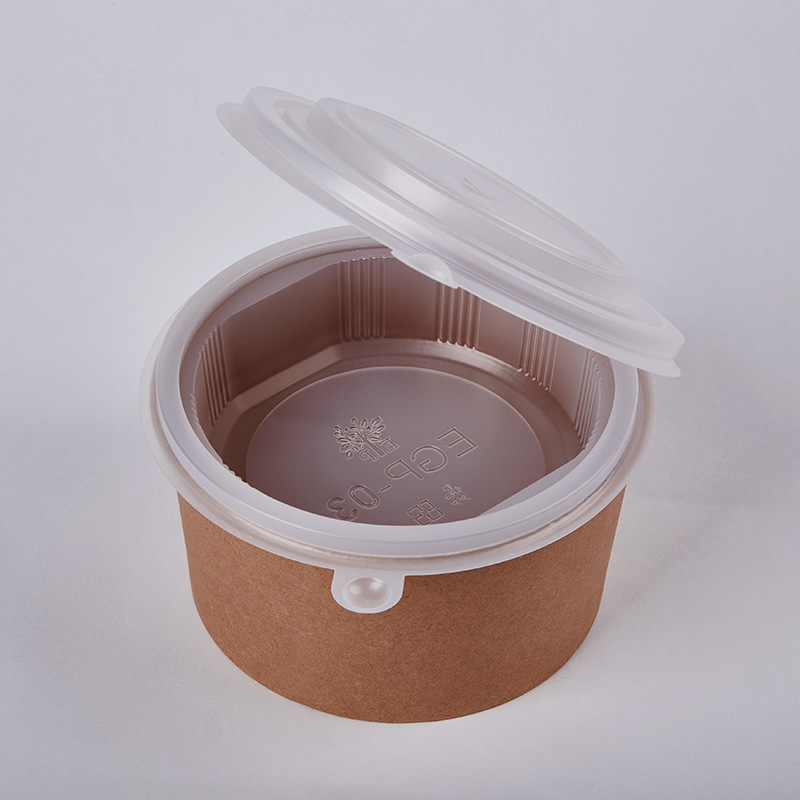
A leak-resistant paper bowl combines several design features. The paperboard provides the structure, the inner coating helps resist moisture and grease, and the rim and base construction help prevent liquid from escaping through joints or weak points. The lid adds another layer of protection by covering the opening and helping reduce spills during handling.
These features work together. A bowl with a suitable barrier coating can still leak if the base seam is poorly formed. Likewise, a well-made bowl may spill during delivery if the lid is the wrong size or has not been secured correctly.
For food businesses, leak resistance should therefore be assessed under realistic use conditions. Consider the food's temperature, liquid content, oil level, holding time, and expected transportation distance before choosing a specification.
Food delivery packaging needs to protect the contents from preparation through transportation.
1. Choose the Right Paper Bowl Coating
The coating is one of the first details to review when sourcing paper bowls for delivery. Paper fibers naturally absorb moisture, so the bowl generally needs a suitable barrier when it is used for wet, oily, or hot foods.
PE-coated paper bowls
Polyethylene (PE) coatings are commonly used to improve moisture resistance. They can be suitable for many takeaway applications, depending on the bowl's construction and the intended food. Buyers should check whether the selected model is suitable for hot liquids, oily foods, and the required holding time.
PLA-coated paper bowls
Polylactic acid (PLA) is used in some paper food containers as an alternative coating material. It may be relevant to buyers exploring compostable packaging, but the environmental claims depend on the complete product, applicable certification, and available waste-treatment conditions. Do not assume every PLA-coated bowl is suitable for home composting or accepted by local composting facilities.
Water-based barrier coatings
Water-based coatings are another option for selected paper food packaging. Their performance varies by formulation and product design, so buyers should request technical information and conduct application-specific tests. Recyclability and compostability also depend on the coating, fiber recovery process, and local waste infrastructure.
ElementsCup offers different paper bowl material and coating options, including PE, PP, PET, PLA, and water-based coatings. You can compare available options in the paper food bowls range and confirm the suitability of each specification with the supplier.
2. Match the Lid to the Bowl
A lid is not simply an accessory. It is an essential part of a leak-resistant takeaway package. Even a durable bowl may spill if the lid is too loose, too tight to close properly, or incompatible with the rim design.
When selecting paper bowls with lids, check the following:
Rim compatibility: The lid should match the bowl's diameter and rim profile.
Closure security: The lid should attach consistently without leaving gaps or becoming difficult for staff to close.
Heat tolerance: Confirm that the lid material is suitable for the temperature of the food and the intended serving conditions.
Stacking performance: Lidded bowls should remain stable when stacked or packed into delivery bags.
Food visibility: Clear lids can help customers identify salads and prepared meals, while paper lids may suit other packaging needs.
Not every lid is designed to be completely leakproof when inverted or shaken. If a restaurant delivers soups or sauces, it should test the assembled bowl and lid together rather than relying on a general product description.
A compatible lid helps reduce spills and keeps food covered during delivery.
3. Select the Bowl Shape and Capacity for the Menu
The shape and size of a paper bowl influence both presentation and handling. A bowl that is too small may cause food to press against the lid. One that is too large can waste packaging space and allow the contents to move more during transportation.
For soup, curry, and saucy noodles, buyers should prioritize a suitable depth, liquid capacity, and lid fit. For salads and grain bowls, a wider opening can make the contents easier to arrange and more appealing to customers. Rectangular bowls may work well for certain pasta dishes, meal portions, or food combinations that need a different presentation.
Capacity alone does not tell the whole story. Two bowls with the same nominal volume may have different diameters, heights, and usable fill levels. Buyers should compare the actual dimensions and test with a typical serving before choosing a final size.
For restaurants and distributors sourcing salad packaging, the paper salad bowls range includes different capacities for a variety of takeaway meals. Confirm the current dimensions and matching lid options for the selected model.
4. Test Leak Resistance Before Bulk Ordering
Product samples are especially useful when selecting packaging for food delivery. A simple test plan can help identify problems before a large order reaches the kitchen or distribution warehouse.
Fill test: Fill the bowl with the intended food or a suitable test liquid to the normal serving level.
Holding test: Leave the contents in the bowl for the expected time before delivery, including a reasonable safety margin where appropriate.
Base and seam inspection: Check the underside, sidewall joints, and base for moisture, softening, or leakage.
Lid-fit test: Close the lid and inspect the rim for gaps. Check whether the lid remains secure during normal handling.
Transport simulation: Place the assembled package in the type of delivery bag used by the business and simulate ordinary carrying and movement.
Temperature check: Repeat testing with food at the expected serving temperature, following the product's stated use limits.
These practical checks do not replace formal testing or food-contact compliance documentation. They help buyers evaluate whether a specific bowl and lid combination suits the intended application. For hot food, also confirm the product's temperature limits and any restrictions on reheating.
5. Consider Food Safety and Heating Requirements
Leak resistance is only one part of food packaging performance. Materials that contact food must be suitable for the intended use and comply with the relevant requirements in the destination market.
Before approving a product, request the available food-contact documentation and confirm which material and product configuration it covers. A document for one coating or bowl model should not automatically be treated as proof that every product in a supplier's range meets the same requirements.
Microwave and oven suitability also require careful attention. Paper bowls are not automatically safe for every heating method. Suitability depends on the bowl's paperboard, coating, adhesives, printing, lid material, and the manufacturer's instructions. A bowl described as microwaveable may still need to be used without its lid, or within specific time and temperature limits.
For delivery businesses that offer reheatable meals, verify the exact heating instructions and communicate them clearly to customers. Avoid assuming that a paper bowl suitable for hot food is also suitable for oven use.
6. Customization Options for Restaurants and Wholesale Buyers
For food brands, packaging is part of the customer experience. Custom printing can help a bowl carry a logo, brand colors, promotional message, or product information. For distributors, offering several sizes and designs can make it easier to serve restaurants with different menus.
When requesting a custom quotation, prepare the following details:
Required capacity, bowl dimensions, and preferred shape.
Food type, serving temperature, oil content, and expected holding time.
Preferred paper material and barrier coating.
Lid material, closure style, and required lid quantity.
Printing artwork, colors, and packaging requirements.
Estimated order volume, delivery destination, and target lead time.
These details help the manufacturer recommend a suitable configuration and quote more accurately. Before mass production, confirm the final artwork, product specification, sample approval, and quality requirements in writing.
For buyers who need a coordinated packaging solution, ElementsCup also provides other custom food packaging products. Ask the supplier about current customization capabilities, minimum order quantities, and compatible lid options.
Frequently Asked Questions
Are paper bowls with lids leakproof?
Some are designed to resist leakage, but performance depends on the bowl's coating, seams, rim construction, lid fit, and the food being packed. Test the complete bowl-and-lid combination under realistic delivery conditions before using it at scale.
Which coating is best for paper bowls used for soup?
The best coating depends on soup temperature, holding time, and the product's construction. PE, PP, PLA, PET, and water-based coatings have different properties and limitations. Request technical details and confirm suitability with the supplier.
Can paper bowls with lids be used in the microwave?
Only when the specific bowl is identified as suitable for microwave use. Check the manufacturer's instructions, temperature limits, and whether the lid must be removed. Do not assume every paper bowl or lid can be reheated safely.
How can restaurants prevent paper bowls from leaking during delivery?
Choose a bowl designed for the food, use a compatible lid, avoid overfilling, and follow the manufacturer's temperature and handling guidance. Conduct holding and transport tests with typical menu items before adopting a new package.
Can paper bowls be customized for wholesale orders?
Many suppliers offer different sizes, materials, coatings, and printing options. Buyers should confirm the available configurations, minimum order quantity, artwork requirements, lead time, and documentation for the exact product being ordered.
Choose Paper Bowls That Perform from Kitchen to Customer
Reliable food delivery packaging starts with matching the bowl to the menu and the conditions it will face. The right combination of paperboard, barrier coating, bowl shape, and lid can help reduce leaks, protect food presentation, and make delivery handling more predictable.
For restaurants, food service distributors, and private-label brands, sample testing is a practical way to compare options before placing a bulk order. Review the product specification, verify food-contact and heating requirements, and test the assembled package with the actual food whenever possible.
ElementsCup offers paper food bowls and customization options for different food service applications. Contact the team with your target capacity, food type, lid preference, and estimated quantity to discuss a suitable packaging solution.