 How to Choose Custom Cold Drink Cups for Takeaway Beverages and Brand Promotion
Oct 23, 2026
A cold drink cup has two jobs at once. It has to keep your beverage cold and secure on the way out the door. It also has to carry your brand into the street, the office, and the customer's social feed. Branded cups can drive an 8–15% repeat customer lift through stronger brand recall, so the cup itself earns its keep.
So how do you choose custom cold drink cups that handle takeaway drinks and brand promotion at the same time? This guide from elements walks you through five practical steps: beverage needs, material, lid fit, branding, and cost.
Key Takeaways
Start with your menu to pick cup sizes and materials that fit your most popular drinks.
Test lids on filled cups with real drinks to prevent leaks and spills during transport.
Choose clear plastic cups to show off drinks or paper cups for a premium brand look.
Use custom printing or stickers to turn cups into moving ads that build brand recall.
Weigh printing costs against brand impressions to get the best value for your budget.
Assess Needs for Custom Cold Drink Cups
Match Cup Format to Drinks
Start with your menu, not the catalog. The drinks you serve most often should drive cup size, material, and lid style. A café that sells mostly iced coffee works in a different range than a bubble tea shop or a fast-food counter.
Look at how the formats split by drink type. Iced coffee and café drinks commonly land at 10, 12, and 16 oz, where clear PET shows off the layers. Bubble tea runs on 500 ml and 700 ml cups with a 95 mm rim, because the sealing machine sets that constraint. Fast food leans on 12, 16, and 21–22 oz sizes with one lid diameter across the lineup. Events often get by with just two sizes, such as 9 and 16 oz.
You can order custom paper cups in any size, from small 4 oz cups upward. Many shops still narrow the lineup on purpose. A tight range of 8, 12, and 16 oz covers most demand, simplifies inventory, and cuts over-portioning. Treat ounce labels as purchasing shorthand, since real capacity shifts with ice, headspace, and lid fit.
Plan for Portability and Timing
Ask how long the drink stays in the cup. A drink consumed at the counter within minutes has different needs than one carried for an hour. Disposable cold cups typically hold drink temperature for roughly 20 to 40 minutes, depending on ice quantity, ambient temperature, lid presence, and handling. These cups serve short-term takeaway, not the performance of an insulated travel mug.
Longer carry times push you toward PET or PP, which handle condensation and keep their structure. Paper cold cups suit quick counter service, provided the coating and structure match extended ice contact. Lid priorities shift too. Cold drinks fail through condensation, straw mismatch, lid pop-off, and rough handling, so lid security and fit matter more than insulation. The elements team can help you match these priorities to your busiest drinks before you commit.
Compare Cup Materials
Material choice comes down to how each option handles your drinks, your branding, and your disposal story. Neither paper nor plastic wins everywhere. Each fits a different job, and the right pick depends on your menu and your venue.
Clear Plastic Options
Clear cups put the drink on display, and that transparency sells. PET gives you glass-like clarity, high impact strength, and resistance to cracking or crushing, which suits carbonated drinks and iced coffee layers. It stays rigid and clear even when a cold drink sweats. PLA offers similar visual appeal with a compostable angle, and it works well for iced coffee, juices, smoothies, fruit tea, and soft drinks in juice bars, cafés, and bubble tea shops.
Food safety is a selection criterion, not an afterthought. Ask suppliers for third-party lab reports showing compliance with FDA 21 CFR 177.1630 for the U.S. market or EU Regulation No. 10/2011 for Europe. Facility certifications such as ISO 9001:2015 or the BRCGS Packaging Standard signal consistent quality and hygiene. For PLA, confirm EN 13432 or ASTM D6400 before you print "compostable" on anything.PLA products frequently carry FDA clearance, BPI, ASTM D6400, and EN13432 certifications. However, PLA cups should not be used for hot beverages due to their low melting point, as they may distort or leach materials at high temperatures; they are recommended for cold beverages only.
Recyclability deserves a honest look. Plastic cups are recyclable in theory, but real-world rates stay low because thin cups mis-sort and contamination ruins resin. Composting is limited by plastic lining and contamination.
Paper Cup Options
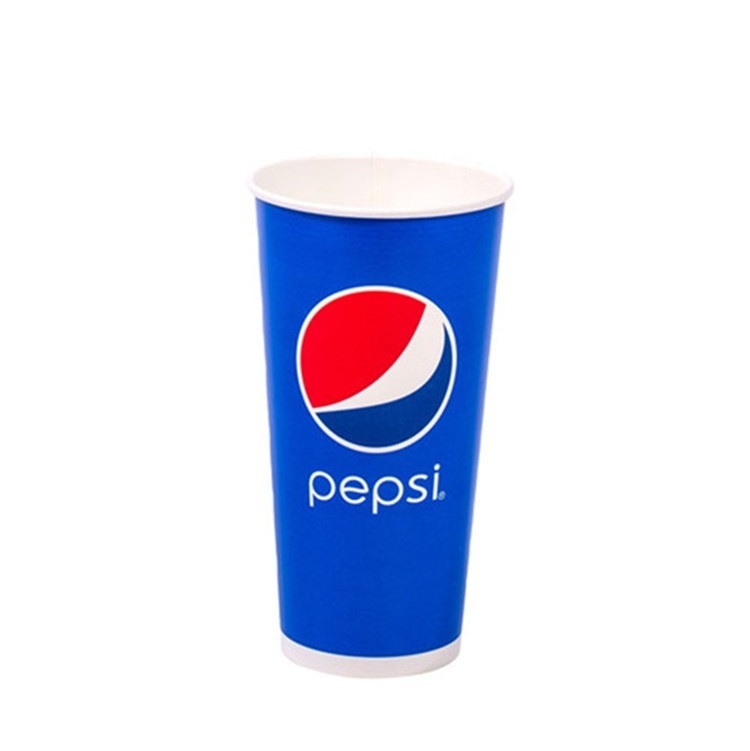
Paper cups bring a premium, polished look that photographs well and suits cafés, conferences, and hospitality events. The smooth surface holds sharp fine typography, clean gradients, and multi-color logos, so strict brand guidelines reproduce accurately. You can order formats like the 22oz custom disposable paper coke cup for fast-food style service, or the Customsizable Paper Cup for Cold Drinks when you want a cold-specific build. Paper also carries strong eco-conscious perception with universities, nonprofits, and wellness brands.
Cold performance is where paper asks more of you. Paper insulates hot drinks well, but it becomes soggy and fails against cold, condensation-heavy drinks. A plastic-based inner lining (PE or PLA) helps, yet single-coated cups can still split or leak when filled for too long. Recycling requires specific processing conditions, and that lining complicates the stream. Choose paper for shorter carry times and branding-forward settings, and test it against your sweatiest drinks before committing your custom cold drink cups order.
Prioritize Lid Compatibility
Choose Lid Types by Drink
Your lid should follow the drink, not the other way around. Match the lid style to both the beverage and the cup material, and the whole package works together. A clear dome lid shows off colorful juices and smoothies, and it leaves room for toppings and garnish. It usually comes with a cross-slit straw opening and costs more than a flat lid. A flat lid with a straw slot sits lower, seals securely, and costs less. It suits to-go orders and delivery, though it hides the drink color and leaves no room for toppings. Skip sip hole lids for juice bars, since juice is too thick to sip comfortably and customers expect a straw.
Drink Type
Recommended Lid
Why It Works
Soda
Tightly sealed flat lid
Keeps carbonation intact and prevents spills
Juice
Flat lid with straw slot
Simple and quick for fast service
Smoothies
Dome lid with large opening
Space for toppings; fits wider straws
Coffee (foam drinks)
Spill-proof sipping lid or dome lid
Small holes prevent spills; dome holds foam
PET lids stay glossy and clear and resist condensation, which makes them a favorite for smoothie bars and iced drink chains. The elements team can help you pair the right lid with each Cold Drink Cups format on your menu.
Test Fit Before Ordering
Never commit to a full order on a catalog photo. Test the cup and lid as one system first. Match the exact lid to the exact cup, close it with normal staff pressure, and check that the entire rim engages. A lid that grips too tight deforms the cup, and one that sits too loose lifts during transport. Re-test after filling, because heat and handling can change the rim shape.Test the exact lid on the filled cup at the intended drink temperature. Check that the entire rim engages, then carry the cup for the normal service or delivery period and inspect for lid lift, leakage, and rim deformation.
Fill with your real beverage at service temperature and hold it for the longest realistic carry time. Inspect the sidewall, bottom seam, and rim for softening, seepage, or lid movement. Test several units from the pack and record how many you tried and how many failed, since one perfect sample can hide normal variation. Give your supplier the cup rim diameter and the intended matching lid, because a nominal cup size alone does not prove compatibility. Start with your highest-volume sizes, then expand once the fit holds.
Brand Promotion With Custom Cold Drink Cups
Choose a Printing Method
Full-color printing turns the cup into a moving billboard. You can print logos, taglines, and seasonal designs across the full wrap, and the cup carries that message through every delivery and every walk down the street. Paper cups take multi-color wrap printing well, and compatible plastic cups accept full-wrap graphics too. For shorter runs or tighter budgets, custom permanent ink stamps work on paper cups and on compatible plastic cups. A stamp gives you a clean single-color mark without a full print setup. Stamps suit small batches, pop-up events, and shops that change designs often, since you avoid a full print setup each time.
Stickers offer a smart middle path. If a drink is seasonal or you are still unsure whether it will stay on the menu, test it with a sticker on a stock cup first. You get branding flexibility without committing to a full printed run. Once the drink proves itself, move it into printed cups. This staged approach keeps your Custom Cold Drink Cups spend tied to drinks that actually sell.
Consistent colors and logos build a mental link between the drink and your brand. A customer sees the same cup, the same mark, and the same color every visit. That repetition does the work. Every takeaway order becomes a small ad that travels with the customer. A sturdy cup also signals quality, and a flimsy one undercuts the message your print is trying to send.
Balance Branding and Cost
Custom printing changes your cost per cup, and the drivers are predictable. Simple logos or text cost less to print than intricate, multi-colored designs. Advanced techniques like digital or screen printing handle complex designs but raise the price. More colors mean more layers of ink and higher expenses.Simple logos or text cost less to print than intricate, multi-colored designs. Advanced printing techniques like digital or screen printing can handle complex designs but will increase the price. The number of colors used also factors into the cost; more colors mean more layers of ink and higher expenses.
Cup Type
Custom Printing / Cost Drivers
Paper Cups
Multi-color wrap printing; heavier stock; double-wall construction; specialty lids
Plastic Cups
Full-wrap graphics; frosted finishes; thick reusable plastic; larger capacities
Both
Cost influenced by print colors, cup size, wall thickness, insulation level, order quantity, and packaging configuration
Weigh branding impact against unit cost with a simple test. Ask what each cup earns back in impressions. Custom branded cups deliver a higher return on investment than alternatives such as digital ads or printed brochures. They are relatively inexpensive, particularly in bulk, and they work as long-term promotional items. Customers reuse or repurpose them, so you reduce advertising spend while increasing brand impressions. Compare the per-cup print premium against the number of impressions each cup delivers over its life. That lasting value at a low per-unit cost is the argument for investing in your Custom Cold Drink Cups rather than plain stock. Ask the elements team for a quote at several color counts so you can see how price steps up.Work through the steps in order. Start with your beverage needs, then pick a material, then confirm lid fit, then plan your branding, and weigh cost last. The best cup is the one that satisfies all five factors for your specific menu and budget, not the one with the lowest price tag or the boldest print.
You don't have to guess at any of it. Request a free sample box from elements and test your Custom Cold Drink Cups and lids together with real drinks before you order. Ask for a quote at the same time, and you'll usually get pricing back within one business day.
FAQ
What cup sizes should a small shop start with?
Keep the lineup tight. A range of 8, 12, and 16 oz covers most demand and simplifies inventory. Events often get by with just two sizes, such as 9 and 16 oz. Add larger formats only when your menu calls for them.
Can I use the same Cold Drink Cups for hot and cold drinks?
No. PLA clear cups have a low melting point and may distort with hot beverages, so keep them cold-only. Paper cups built for cold drinks also behave differently than hot cups. Match each cup to its drink, and ask elements to confirm the pairing.
Should I print cups or use stickers first?
Test uncertain or seasonal drinks with stickers on stock cups. You get branding flexibility without a full printed run. Once a drink proves itself, move it into printed Cold Drink Cups. This keeps your spend tied to drinks that actually sell.
How do I confirm lids fit before a big order?
Test the exact lid on the exact cup, filled with your real beverage at service temperature. Carry it for the longest realistic time and check for lid lift, leakage, and rim deformation. Start with your highest-volume sizes, then expand.
How fast can I get pricing and samples?
Request a free sample box from elements and test your Cold Drink Cups and lids together with real drinks before ordering. Ask for a quote at the same time, and you'll usually get pricing back within one business day.