 Eco-Friendly Packaging Trends: Transitioning to Water-Barrier Coated Containers
Nov 03, 2026
As restaurants, coffee shops, supermarkets, and food delivery businesses look for more sustainable packaging, paper-based food containers are becoming an increasingly popular choice. However, switching from plastic packaging to paper is not as simple as changing the base material. Food packaging still needs to resist moisture, grease, and liquid while maintaining its strength during storage, transportation, and use.
This is where water-based barrier coatings are gaining attention. Instead of relying on conventional plastic linings, manufacturers can apply specially formulated aqueous coatings to paperboard to provide the barrier performance required for foodservice applications.
From coffee cups and takeaway bowls to sushi trays and food boxes, this packaging technology offers brands another way to reduce their reliance on conventional plastic coatings. For foodservice operators, distributors, and packaging buyers, understanding the material options is an important step toward making practical sustainability improvements.
1. Why Is Eco-Friendly Food Packaging Changing?
Traditional disposable food packaging often combines paperboard with plastic layers to prevent liquids and oils from penetrating the paper. While this structure provides useful protection, separating different materials during recycling can be difficult, depending on the packaging design and local recycling infrastructure.
As sustainability requirements become more important, food brands are looking for packaging that uses fewer conventional plastic components without compromising product performance.
Several factors are driving this change:
Plastic reduction goals: Foodservice businesses are reviewing packaging materials to reduce their dependence on conventional plastic.
Consumer expectations: Customers increasingly pay attention to packaging materials and environmental claims.
Packaging regulations: Different markets are introducing requirements related to packaging waste, recyclability, and material composition.
Brand positioning: Sustainable packaging can help restaurants, coffee chains, and food retailers communicate their environmental commitments.
Material innovation: New barrier coating technologies are creating more options for paper-based food packaging.
For packaging manufacturers and wholesale buyers, the challenge is finding a material solution that balances food safety, barrier performance, manufacturing efficiency, and end-of-life considerations.
2. What Is Water-Based Barrier Coating?
Water-based barrier coating, also known as aqueous barrier coating, is a functional coating applied to paperboard or other paper-based packaging materials. It creates a protective surface that helps prevent water, moisture, and grease from penetrating the paper.
Unlike conventional polyethylene (PE) lining, which uses a plastic layer bonded to paperboard, aqueous coatings are formulated using water as the carrier for the coating ingredients. After application and drying, the coating forms a functional barrier on the paper surface.
Depending on the formulation, water-based coatings can provide several useful properties:
Moisture resistance: Helps prevent water and liquid from soaking into paperboard.
Grease resistance: Helps protect packaging from oils and greasy foods.
Heat sealability: Certain formulations can support heat-sealing during cup and container manufacturing.
Paper recovery potential: Some coating systems are designed to support repulping and paper recycling processes.
Plastic reduction: Suitable formulations can replace conventional PE lining in selected packaging applications.
For example, water-based coating paper cups are designed as an alternative to traditional plastic-coated cups. They can be produced in different capacities and customized with various colors, logos, and packaging options.
It is important to distinguish water-based coating from PLA coating. Both can be used in sustainable packaging strategies, but their material composition, processing requirements, certifications, and disposal routes are different.
3. Water-Based Coating vs. Traditional PE and PLA Coatings
Not all paper packaging coatings offer the same environmental and functional characteristics. Buyers should compare different options according to the intended food application and the disposal infrastructure in their target market.
Comparison
PE Coating
PLA Coating
Water-Based Coating
Material type
Polyethylene
Polylactic acid
Aqueous coating formulation
Liquid barrier
Yes
Yes
Yes, depending on formulation
Grease resistance
Available
Depends on design
Depends on formulation
Plastic reduction
Limited
Alternative polymer lining
Can reduce conventional plastic lining
End-of-life options
Depends on local facilities
Requires suitable composting conditions
Depends on coating and paper recovery compatibility
There is no single coating that is automatically best for every application. For example, a hot coffee cup requires reliable liquid resistance and heat-sealing performance, while a takeaway food tray may need stronger grease resistance and structural stability.
Buyers should also request relevant testing and certification documents rather than assuming that a water-based coating automatically makes a product recyclable, biodegradable, or compostable in every market.
4. Where Are Water Barrier Coated Containers Used?
The applications of water-based barrier coatings are expanding across different foodservice packaging categories. Their suitability depends on the coating specification, paperboard structure, and actual conditions of use.
Paper coffee cups and beverage cups
Hot coffee, tea, and other beverages require packaging that can retain liquids without softening or leaking. Water barrier coated cups provide an alternative to conventional PE-lined paper cups. They can be manufactured in single-wall and other suitable cup structures, with custom printing for coffee shops, cafes, and beverage chains.
Paper food bowls and takeaway containers
Salads, noodles, soups, and prepared meals often contain moisture, sauces, or oil. Paper bowls and takeaway containers need an appropriate barrier to maintain their shape during filling, storage, and delivery. Coating selection should match the food temperature, contact time, and liquid or grease content.
Eco-friendly sushi packaging
Sushi packaging has different requirements from beverage cups. A sushi tray must support delicate food, retain its shape, and handle moisture from rice, seafood, vegetables, and sauces. A suitable paperboard structure with an appropriate barrier can provide a practical alternative to conventional plastic trays.
For businesses looking for plastic-free paper sushi trays, kraft and paperboard options can offer a more natural presentation for takeaway sushi, fruit, cakes, and snacks. Buyers should check whether the selected tray and any lid are compatible with their plastic-reduction and disposal requirements.
Paper food boxes and lunch packaging
Takeaway boxes used for fried foods, sandwiches, rice meals, and bakery products may need both moisture and grease protection. Selecting the correct barrier structure helps prevent oil penetration and maintains the appearance of the packaging during transportation.
5. What Should Buyers Consider When Switching to Water-Based Coated Packaging?
Changing packaging materials requires more than comparing product prices. Foodservice brands and wholesale distributors should evaluate how the new coating performs under real operating conditions.
Food contact safety: Confirm that the coating, paperboard, inks, and adhesives comply with the food-contact requirements of the destination market.
Liquid and grease resistance: Test the packaging with the actual beverage or food, including oils, sauces, and moisture.
Temperature performance: Check whether the product is intended for hot filling, cold drinks, refrigeration, or reheating.
Manufacturing compatibility: Confirm that the coating works with the forming, sealing, and converting processes used for the packaging.
Recyclability and compostability: Request technical documentation and verify whether local waste-management facilities accept the finished packaging.
Printing and branding: Check print quality, color consistency, logo placement, and the compatibility of inks with the packaging structure.
Supply consistency: Evaluate production capacity, quality inspection procedures, MOQ, and delivery schedules.
For bulk orders, it is worth requesting samples before finalizing the specification. A practical test can reveal issues that may not appear in a material datasheet, such as leakage after extended contact, deformation, or poor sealing performance.
6. Why Is Customization Important for Sustainable Packaging?
Food brands rarely use one standard container for every product. Cup capacity, bowl shape, tray dimensions, lid compatibility, and printing requirements all vary according to the foodservice operation.
Custom packaging manufacturers can help buyers develop solutions based on their actual requirements, including:
Custom cup capacities and container dimensions
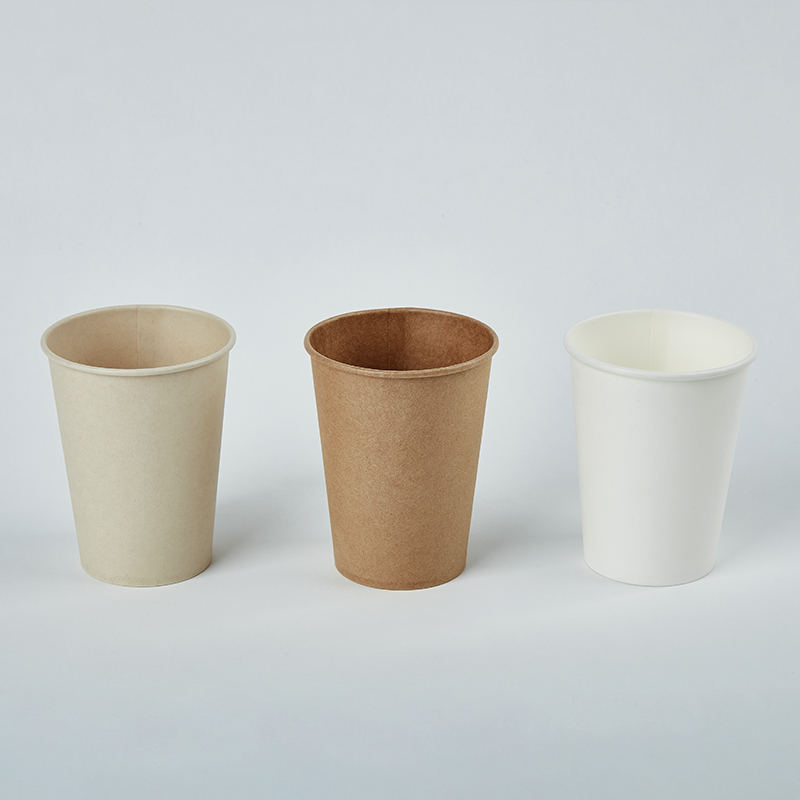
White, kraft, and bamboo-fiber paperboard options
Custom logo printing and brand graphics
Different barrier coating specifications
Matching lids and packaging accessories
Retail-ready and bulk packaging solutions
For example, aqueous barrier coating cups can be developed in different sizes and styles to meet beverage packaging requirements. Elements Cup also offers paper food packaging products for takeaway and foodservice applications.
Working with a manufacturer that understands both material performance and packaging production can make the transition easier, especially for distributors and private-label brands managing multiple product categories.
7. The Future of Eco-Friendly Paper Packaging
The future of sustainable food packaging is likely to involve more application-specific material solutions rather than one universal replacement for plastic. Water-based coatings are an important part of this development because they offer another way to improve the functionality of paper-based packaging while reducing reliance on conventional plastic linings.
At the same time, packaging buyers are paying closer attention to the complete product lifecycle. Material sourcing, manufacturing efficiency, food safety, transportation, recycling infrastructure, and disposal conditions all influence the environmental performance of a packaging product.
Elements Cup, established in 2008, specializes in disposable foodservice packaging, including paper cups, food containers, paper bowls, sushi trays, and other customized packaging solutions. The company provides different paper materials, coating options, sizes, and printing services for international foodservice customers.
Whether you are sourcing water barrier coated cups for a coffee chain or developing eco-friendly sushi packaging for takeaway brands, choosing the right combination of paperboard, barrier coating, and packaging design is essential.
For businesses planning to update their packaging range, Elements Cup's manufacturing team can help discuss material specifications and customized packaging requirements. The right solution should protect food effectively while supporting realistic sustainability goals.
Frequently Asked Questions
1. What are water barrier coated cups?
Water barrier coated cups are paper cups treated with a functional coating that helps prevent liquids from penetrating the paperboard. Water-based or aqueous barrier coatings can provide an alternative to conventional PE linings in suitable beverage packaging applications.
2. Is water-based coating better than PE coating for paper cups?
Water-based coating can reduce reliance on conventional PE plastic lining and may offer advantages in paper recovery, depending on its formulation and the recycling system. However, buyers should compare liquid resistance, heat sealing, food-contact compliance, and end-of-life performance before choosing.
3. Are water-based coated paper cups recyclable?
Some aqueous coated paper cups are designed to be repulpable and recyclable. Actual recyclability depends on the coating formulation, the complete cup structure, and whether local paper recycling facilities accept the product.
4. Can water-based coatings be used for food containers and sushi packaging?
Yes, suitable barrier formulations can be used in selected paper food containers and trays. The coating must be tested for the specific food's moisture, grease, temperature, and contact-time requirements. Lid materials should also be evaluated separately.
5. What should I ask a manufacturer when sourcing eco-friendly paper packaging?
Ask about paperboard specifications, coating composition, food-contact compliance, liquid and grease resistance, recycling or composting certifications, custom printing, MOQ, and sample testing. These details help ensure the packaging meets both functional and sustainability requirements.