 The Ultimate Guide to Water-Based Barrier Coating for Paper Cups
Jul 29, 2026
The Ultimate Guide to Water-Based Barrier Coating for Paper Cups
Jul 29, 2026
You see water based coating paper cup solutions gaining attention because they use innovative, plastic-free technology. This approach supports the move from plastic to paper food packaging. Water-based coatings help you meet strict environmental standards. Recent regulations push for eco-friendly materials.
Regulation
Impact on Water-Based Coatings
SUPD
Promotes compliance with recycling standards, encouraging environmentally friendly materials.
PPWR
Drives the shift towards materials that align with circular economy principles, reducing compliance risks.
You can choose options that comply with SUPD and PPWR, using bio-based materials for a sustainable future.
Key Takeaways
Water-based coatings provide a plastic-free solution for paper cups, aligning with environmental regulations and reducing plastic waste.
These coatings enhance recyclability, allowing cups to be processed with regular paper, which helps minimize landfill waste.
Water-based coatings improve food safety by avoiding harmful chemicals and reducing the risk of microplastics in beverages.
Choosing water-based coatings supports a positive brand image, appealing to consumers who prioritize eco-friendly products.
Investing in water-based coating technology can lead your business towards sustainability while maintaining product performance.
What Is Water Based Coating Paper Cup?
How Water-Based Barrier Coating Works
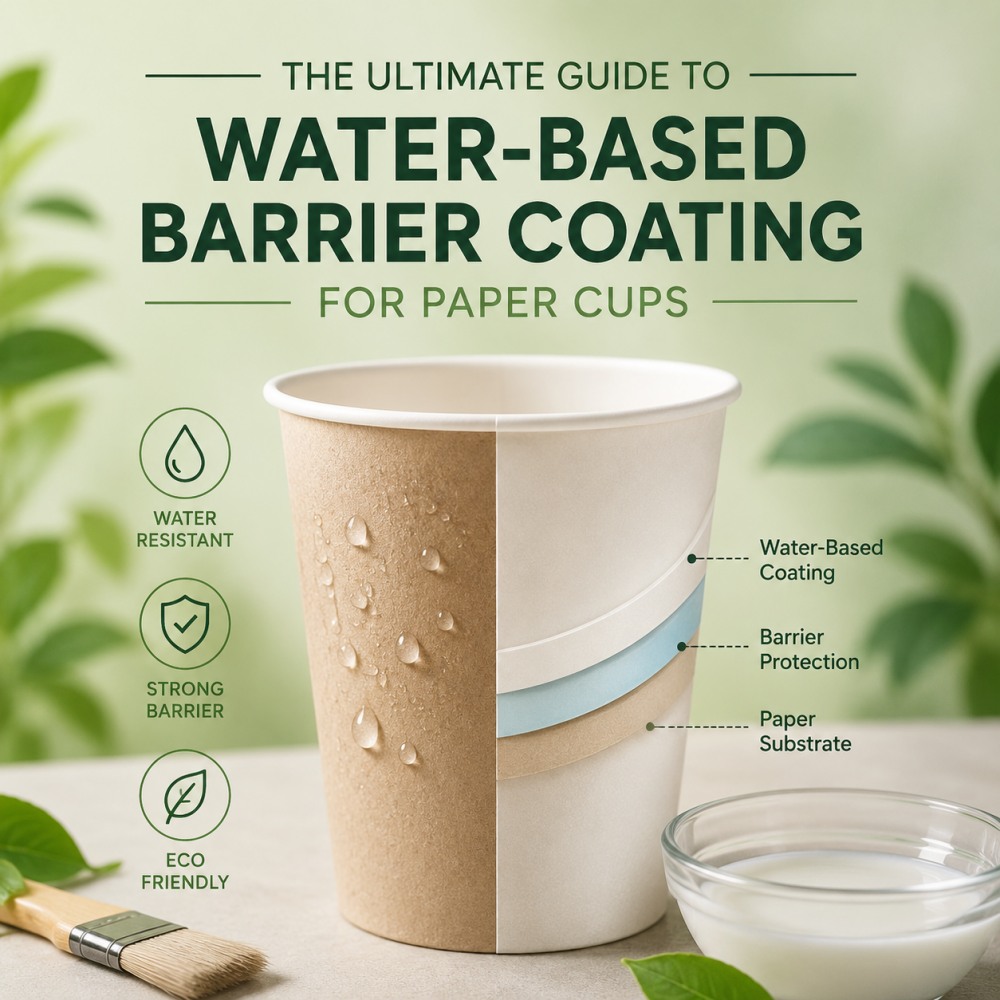
You may wonder how a water based coating paper cup achieves its protective qualities without plastic. The answer lies in the dispersion technique. Manufacturers apply a liquid water-based dispersion directly onto the paperboard. This layer dries to form a thin, flexible barrier that keeps liquids from soaking through the cup. The process does not require a plastic film, which makes the cup easier to recycle.
The chemical makeup of the dispersion is important. It contains emulsifiers and hydrophobic materials. These ingredients work together to block water, grease, and oil. You get a cup that holds both hot and cold drinks without leaking. The absence of a plastic film means you can recycle these cups in standard paper streams. This method supports the growing demand for water barrier coated cups and sustainable packaging.
Tip: The dispersion technique not only improves recyclability but also helps you meet strict environmental standards.
Key Benefits for Food Packaging
Switching to a water based coating paper cup brings several advantages for food packaging. First, you avoid plastic entirely. The coating dissolves back into water during recycling, so it does not create microplastics. This feature allows you to recover up to 99% of the paper fibers, making the cup fully recyclable. You also meet the requirements of regulations like SUPD and PPWR, since the coating does not count as a plastic layer under EU rules.
Here are some key benefits you gain when you choose a water based coating paper cup:
Plastic-Free Solution: You eliminate the need for traditional plastic films, which helps your business align with new environmental laws.
High Recyclability: The coating allows almost all paper fibers to be recovered, so you can recycle these cups with regular paper products.
Improved Compostability: The coating breaks down more easily than plastic, which supports better waste management and composting.
Enhanced Performance: The barrier resists water, grease, and oil, so your drinks and foods stay contained without leaks or soggy paper.
You play a role in reducing plastic waste and supporting a circular economy when you use barrier coating for paper cups. This approach also helps you build a positive brand image. Customers notice when you choose eco-friendly options like paper cup coating. As more businesses and consumers look for sustainable choices, water based coating paper cup solutions stand out as a smart and responsible option.
Water-Based vs PE and PLA Coatings
Composition and Application Differences
You need to understand how the materials in paper cup coatings differ. Water-based coatings use a blend of water, natural materials like starch and cellulose, minerals, and some synthetic polymers. PE coatings rely on polyethylene, a type of plastic. PLA coatings come from renewable resources such as corn starch.
Here is a table that shows the differences in composition and application:
Coating Type
Composition Details
Environmental Impact
Performance Characteristics
Water-Based
Blend of water, natural materials (starch, cellulose), minerals, synthetic polymers
Biodegradable, eco-friendly
Compostable, suitable for various applications
PE
Polyethylene
Non-biodegradable, recycling challenges
Excellent moisture and grease resistance
PLA
Derived from renewable resources (corn starch)
Biodegradable under industrial composting
Food grade, high strength, resistance to heat, water, and grease
You see that water-based coatings offer a plastic-free solution. You can apply them directly to paperboard using a dispersion technique. PE and PLA coatings require extrusion or lamination, which adds complexity to manufacturing. Water-based coatings make recycling easier because they do not create microplastics.
Another table highlights application differences:
Coating Type
Durability
Environmental Impact
Cost
Compostability
Ideal Use Case
PE
High
Poor
Low
No
Cost-driven mass production
PLA
Medium
Good
Medium
Industrial composting
Sustainable brands
Water-Based
Medium
Excellent
Medium-High
Yes
Eco-friendly packaging
You can see that water-based coatings fit best for eco-friendly packaging and brands that value sustainability. PE coatings suit mass production where cost matters most. PLA coatings work for brands that want renewable materials but need industrial composting.
Efficiency and Performance
You want your paper cup coating to perform well and stay cost-effective. PE coatings offer the lowest cost and excellent performance. PLA coatings cost more but provide good strength and resistance. Water-based coatings cost the most but match PE in performance.
Here is a comparison table:
Feature
PE Coating
PLA Coating
Water-Based Coating
Cost
Lowest
Medium
Highest
Performance
Excellent
Good
Excellent
You notice that water-based coatings deliver excellent performance. They resist water, grease, and oil, making them suitable for hot and cold drinks. PE coatings have high durability and moisture resistance. PLA coatings offer moderate durability and moisture resistance.
Another table shows performance metrics:
Coating Type
Durability
Moisture Resistance
Environmental Impact
PE
High
Excellent
Moderate
PLA
Medium
Moderate
High
Water-Based
Medium
Low
Very High
You see that water-based coatings excel in environmental impact. PE coatings last longer and resist moisture better, but they pose recycling challenges. PLA coatings perform well but need special composting facilities.
Note: Water-based coatings help you meet strict environmental standards without sacrificing performance. You can use water barrier coated cups for a wide range of beverages and foods.
Environmental Impact
You want to choose a coating that supports sustainability. Water-based coatings stand out because they work with modern recycling systems. You can recycle them with regular paper, which enhances their recyclability. PE coatings create recycling challenges, and PLA coatings need industrial composting.
Water-based coatings can be repulped during recycling. You reduce waste and maintain cup strength.
You find water-based coatings more compatible with recycling systems than PE and PLA coatings.
Water-based coatings lower the environmental footprint. You enable better recycling and reduce energy use during production.
PLA coatings require industrial composting. PE coatings are difficult to recycle and pose sustainability challenges.
You play a key role in reducing waste when you choose barrier coating for paper cups. Water-based coatings support a circular economy and help your business meet environmental goals. Customers appreciate eco-friendly choices like water based coating paper cup solutions. You build trust and show responsibility by selecting sustainable packaging.
Food Safety and Microplastics
Food Contact Safety Standards
You want your water based coating paper cup to meet strict food safety standards. Manufacturers design these coatings to avoid harmful chemicals. You can see the main features in the table below:
Feature
Description
Non-toxic
Water-based coatings are free from harmful chemicals like PFAS, BPA, and VOCs.
Biodegradable
These coatings are eco-friendly and compostable, making them sustainable.
Moisture and oil resistance
They provide high resistance to moisture and oil, essential for food safety.
You can trust water barrier coated cups to protect your drinks and foods. These coatings resist moisture and oil, so your food stays safe. You avoid exposure to toxic substances. You also support sustainability because the coatings break down naturally.
Tip: Always check if your paper cup coating meets recognized food contact standards. This helps you ensure safety for your customers.
Studies show that migration of chemicals depends on the type of food and the medium. You can see the findings in the table below:
Study
Findings
Key Factors Influencing Migration
Xu et al. (2010)
Phthalate migration varied significantly, with higher rates in edible oils compared to mineral water.
Lipophilic properties of food
Baele et al. (2020)
Higher migration levels in high-fat foods like chocolate and biscuits.
Fat content of food
Kubwabo et al. (2009)
BPA migration rates differed between ethanol and water, indicating medium influence.
Medium of contact (water vs. ethanol)
You see that water-based coatings minimize migration risks, especially when compared to plastic linings.
Microplastics and Health Concerns
You want to avoid microplastics in your barrier coating for paper cups. Water based coating paper cup solutions help you achieve this goal. Here are the main ways these coatings address microplastic concerns:
The elimination of polyethylene (PE) plastic linings reduces the risk of microplastics being released into beverages.
Water-based coatings use safe materials for food contact and do not leach harmful chemicals.
These coatings are compostable and recyclable, contributing to sustainability and reducing plastic waste.
Microplastics pose health risks. You should know the facts:
Microplastics can release harmful chemicals like phthalates, PFAS, and BPA into food, which are known endocrine disruptors.
These chemicals have been linked to various health issues, including cancer and reproductive problems.
A 2023 study indicated that prenatal exposure to phthalates can lead to behavioral and learning disorders in children.
Microplastics have been detected in various human body parts, raising concerns about their health impacts.
You protect your customers when you choose water barrier coated cups. You reduce the risk of microplastics and harmful chemicals. You also support a healthier environment with sustainable paper cup coating options.
Recyclability and End-of-Life
Recycling Water Based Coating Paper Cup
You can recycle water based coating paper cup products easily. These cups fit into standard paper recycling streams. Facilities sort them alongside regular paper, and you do not need extra treatment. The recycling technology already exists, so you can repulp these cups without difficulty. Many recycling centers classify them under the PAP 22 code, which means you avoid complex separation steps. You help reduce landfill waste when you choose water barrier coated cups.
Cup Type
Recycling Capability
Water-Based Coated Cups
Can be recycled in standard paper streams
PE-Coated Cups
Cannot be recycled due to the plastic layer
PLA-Coated Cups
Faces recycling issues similar to PE
Compostability and Biodegradability
You support composting and biodegradation when you select barrier coating for paper cups. Water-based coatings break down naturally. You can compost these cups at home or in industrial facilities. The coating dissolves in water and integrates with paper fibers, so it does not leave harmful residues. You improve waste management and help create nutrient-rich compost. PE-coated cups do not compost, and PLA-coated cups require special industrial composting.
Tip: Always check local composting guidelines to ensure proper disposal of paper cup coating products.
End-of-Life Comparison
You make a positive environmental impact when you choose water barrier coated cups. The end-of-life outcomes differ for each coating type. Water-based cups recycle or compost easily. PE-coated cups usually end up in landfills. PLA-coated cups need industrial composting and often face recycling challenges.
Aspect
Water-Based
PE-Coated
PLA-Coated
Recyclability
High in paper streams
Low/specialized
Limited
Compostability
Yes
None
Industrial only
Common End
Recycle/compost
Landfill
Landfill/compost
Water-based barrier coated cups are fully water-soluble and integrate with fiber.
You can dispose of them in standard mixed-paper or cardboard recycling bins.
You help close the loop in packaging sustainability when you use water based coating paper cup solutions. You support recycling, composting, and a cleaner environment.
Real-World Performance
Barrier Properties and Liquid Holdout
You expect water barrier coated cups to keep drinks contained without leaks. Water-based barrier coatings form a strong layer on the paperboard. This layer prevents water from soaking through, even with hot or cold beverages. You can rely on these cups for coffee, tea, or juice. The coating maintains the cup’s shape and strength, so you avoid soggy paper and spills. Manufacturers design water based coating paper cup products to match the performance of traditional plastic linings. You get reliable liquid holdout and a sustainable solution.
Tip: Water-based coatings help you serve drinks confidently, knowing the cup will not fail during use.
Grease and Oil Resistance
You need barrier coating for paper cups that can handle greasy foods and oily drinks. Water-based barrier coatings create a plastic-free shield that resists grease, oil, and water. You find that these coatings perform as well as polyethylene, keeping liquids and oils inside the cup. The barrier composition gives substantial resistance to oil and grease, so you avoid leaks and stains.
Description
Type of Resistance
The coating resists water, oil, and grease.
Substantial resistance
Water, oil, and grease cannot easily go through the barrier coating.
Effective barrier
The barrier composition gives resistance to oil, grease, and water.
Effective barrier
You can use water based coating paper cup solutions for beverages with fatty acids. The cups maintain their structure and prevent leaks, even with oily substances. Compared to polyethylene coatings, water-based options are easier to recycle and more eco-friendly.
User Experience
You notice several benefits when you choose water barrier coated cups. The water-based dispersion coating protects paper from moisture and supports composting or recycling. You do not need to separate layers, which simplifies disposal. These cups meet strict safety standards and receive FDA approval for food contact. Businesses appreciate the appeal of compostable and recyclable materials. Innovations in renewable resources and water-based barrier systems enhance sustainability.
Water-based coating is eco-conscious and protects paper from moisture.
Cups can be composted or recycled without separating layers.
Approved for food contact by the FDA.
Higher production costs due to complex application.
May not suit all products, such as carbonated beverages.
You help your business stand out by using paper cup coating that supports environmental goals. Customers value the sustainable choice and enjoy a reliable, safe drinking experience.
Regulatory Compliance
Global Regulations Overview
You need to understand the global regulations that affect water based coating paper cup solutions. These rules help you ensure safety and sustainability for your products. Many countries set strict standards for food contact materials. You see agencies like the FDA in the United States and EFSA in Europe leading the way. Brazil uses ANVISA, while South America follows Mercosur guidelines. National regulations in Germany, Switzerland, and Canada also play a role.
Regulation
Description
FDA
United States Food and Drug Administration regulations for food safety.
EFSA
European Food Safety Authority regulations applicable in the EU.
ANVISA
Brazilian Health Regulatory Agency standards.
Mercosur
Regulations from the South American Common Market.
National regulations
Various national regulations from countries like Germany, Switzerland, and Canada.
You must check these regulations before choosing a barrier coating for paper cups. Each region sets its own requirements for paper cup coating and water barrier coated cups. You protect your customers and your business by following these rules.
Certifications and Standards
You want your water based coating paper cup to meet recognized certifications and standards. These certifications show that your products are safe for food contact and meet environmental goals. You should look for compliance with FDA 176.170 for direct food contact in North America. In Europe, Bfrxxxvi is the standard for direct food contact. Your cups must also show heat resistance up to 176°F.
FDA 176.170 compliance for North America
Bfrxxxvi compliance for Europe
Heat resistance up to 176°F
You can ask suppliers for certificates and test reports. These documents prove that your water barrier coated cups meet all safety and quality standards. You build trust with customers when you use certified barrier coating for paper cups. You also avoid legal risks and support sustainable packaging.
Tip: Always verify certifications before sourcing paper cup coating solutions. This step helps you ensure compliance and quality.
Choosing the Right Solution
Assessing Business Needs
You need to evaluate your business requirements before selecting a water based coating paper cup solution. Start by considering key criteria that affect both performance and sustainability. The table below helps you compare important factors:
Criteria
Description
Packaging approval requirements
Focus on material composition and recyclability early in design.
Recycling and fiber recovery focus
Choose coatings that support fiber recovery and fit recycling systems.
Water-based coating adoption
Look for solutions that apply easily on existing production lines.
Multifunctional coating solutions
Seek coatings that protect against grease, moisture, and allow heat sealing in one layer.
Sustainable foodservice packaging
Select coatings that boost performance and support recycling goals.
Low-coating-weight technologies
Prefer coatings that deliver barriers with less material and lower drying needs.
Lengthy approval process
Ensure coatings perform well during production and storage to avoid delays.
Food-contact compliance requirements
Confirm coatings meet food safety and regulatory standards for your market.
Production efficiency challenges
Check for suitable drying capacity and stable conditions for water-based coatings.
You should also weigh procurement considerations. Water-based coatings are eco-friendly and break down easily in nature, reducing waste. However, they often cost more than traditional PE coatings. Some coatings may not match PE in heat or grease resistance, which can limit use for certain foods or drinks. Availability may be limited, so sourcing can take extra time. Always consider regulatory readiness, product safety, heat performance, and how consumers view your packaging.
Sourcing and Supplier Tips
When you source water barrier coated cups or barrier coating for paper cups, ask suppliers detailed questions to ensure you get the right product. Use the table below to guide your discussions:
Supplier Claim
Follow-Up Question
“Hot cup grade”
What beverage temperature, hold time, and cup format was this designed for?
“Food grade”
Which product, coating, use condition, and target market does the documentation cover?
“Compostable”
What certification or test evidence supports this, and does it apply to the full cup and coating?
“Recyclable”
In which market or collection system is this claim intended to apply?
“Leakproof”
What testing method or service condition supports the claim?
“Suitable for coffee”
Does that include milk-based, sweetened, or extended-hold beverages?
“Eco” or “sustainable”
Which specific attribute is being claimed, and what evidence supports that wording?
You should request certifications and test reports for any paper cup coating. Brands like elementscup provide documentation for food safety, compostability, and recyclability. This helps you verify claims and ensures your water based coating paper cup meets all standards. By asking the right questions, you can confidently choose water barrier coated cups that align with your business goals and sustainability values.
You gain several advantages when you choose water based coating paper cup solutions:
Water barrier coated cups offer a plastic-free, recyclable option that meets food safety standards.
You help reduce landfill waste by allowing cups to be sorted with regular paper.
Barrier coating for paper cups supports your brand’s environmental goals and aligns with consumer demand for eco-friendly products.
Solenis and other providers offer paper cup coating technologies that match traditional performance while improving sustainability. You can invest in equipment, secure renewable materials, and educate customers to support your transition. By adopting these solutions, you lead your business toward a greener future.
FAQ
What makes a water based coating paper cup different from a regular paper cup?
You get a water based coating paper cup that uses a plastic-free barrier. This coating keeps liquids inside the cup. Regular paper cups often use plastic linings, which make recycling harder.
Can you recycle water barrier coated cups with regular paper?
Yes, you can recycle water barrier coated cups in standard paper streams. The coating dissolves during recycling, so you recover most of the paper fibers. Always check your local recycling guidelines.
Are barrier coating for paper cups safe for hot drinks?
You can safely use barrier coating for paper cups with hot beverages. These coatings resist heat and prevent leaks. Manufacturers design them to meet strict food safety standards.
Do paper cup coating solutions contain harmful chemicals?
No, paper cup coating solutions avoid harmful chemicals like PFAS and BPA. You get a safe product for food contact. Always ask your supplier for safety certifications.
How do water based coating paper cups help the environment?
You help the environment by choosing water based coating paper cups. These cups reduce plastic waste, support recycling, and break down more easily than plastic-lined cups. Customers notice your commitment to sustainability.